In this guide · 9 practical sections
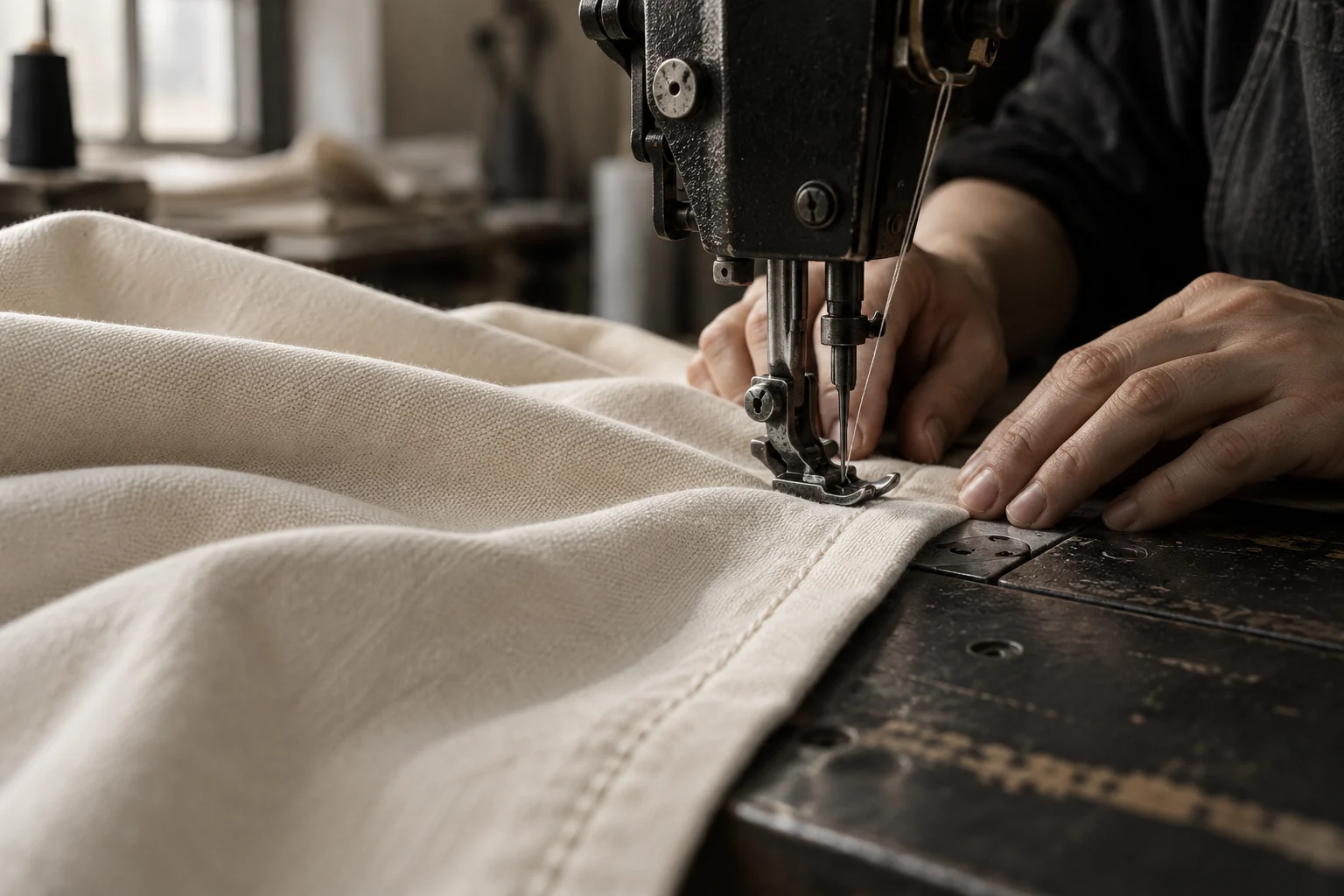
T-shirts, polos and streetwear
Define jersey or pique structure, gsm, fit, rib composition, neck construction, shoulder reinforcement and hem finish. Heavyweight oversized products need balance between body drape and neck stability. Hoodies add hood construction, lining, drawcords, pockets and rib recovery to the specification.
Shirts, dresses and linen sets
Woven products require attention to ease, seam finish, opacity, plackets, closures and pressing. Linen trousers and shorts need a clear waistband and pocket specification. A dress may need lining or seam adjustments to deliver the intended coverage. Check how the fabric behaves on bias-cut or curved sections.
Activewear and stretch garments
Leggings, sports bras and performance tops need movement and stretch evaluation. Specify support expectations, lining, pads, elastic, gusset and seam method where applicable. A successful relaxed fit sample is not proof of opacity or seam comfort under movement.
Workwear, loungewear and specialist products
Uniforms, scrubs, pyjamas, robes and custom niche products are assessed individually. Consider the intended care frequency, pocket use, skin contact and destination requirements. Protective or regulated performance claims require an appropriate review and supporting evidence; ordinary clothing production does not establish protective certification.
Children, baby and pet products
These products need dedicated design and risk review rather than a scaled-down adult specification. The standard minimum for baby or underwear body products is 1,000 pieces per colour; pet apparel starts from 200 pieces per breed under the current policy. Confirm fit and material requirements before assuming a standard apparel minimum.
Activewear: shell fabric is only part of the specification
For leggings and bras, review stretch and recovery, opacity under movement, seam placement, waistband construction, lining, elastic and support requirements. Bra pads and mesh may have their own supply minimums. State whether pads are fixed or removable and how openings are finished. Approve the intended movement and care tests before using performance claims.
Modest garments: document coverage and movement
For a long dress or head-covering garment, specify layer count, opacity, opening positions, length, cuff construction and pocket placement. Check walking, sitting, arm movement and coverage in a physical sample. Clarify whether a hidden pocket or elastic detail is included rather than relying on the photograph. A one-size label still needs a defined measurement specification and fit review.
Outerwear: distinguish water-repellent from waterproof
State the intended use and request an agreed test method and performance requirement. Define shell, lining, membrane or coating if applicable, seams, fastenings and care. Water-repellent surface treatment is not by itself proof that the finished garment is waterproof. Confirm the completed garment construction and evidence before placing a weather-protection claim on the product.
12 product development checklists
Use these to build your first specification. They identify questions to resolve rather than impose a universal construction or size chart.
T-shirtView specification checklist +
- Material starting point
- Jersey; target weight and drape
- Points of measure
- Half chest; HPS length; shoulder; sleeve; neck opening
- Construction to define
- Neck rib ratio; shoulder reinforcement; hem stitch
- Risks to review
- Neck growth; spirality; print cracking
Pullover hoodieView specification checklist +
- Material starting point
- French terry or fleece; reverse specified
- Points of measure
- Chest; length; shoulder; sleeve; hood height/width; cuff
- Construction to define
- Hood layers; pocket shape; rib; cord and eyelets
- Risks to review
- Heavy hood pulling back; bulky joins; rib distortion
Zip hoodieView specification checklist +
- Material starting point
- Sweatshirt fabric with compatible zipper
- Points of measure
- Chest; length; sleeve; zipper length; hood
- Construction to define
- Zipper tape allowance; front alignment; top stop
- Risks to review
- Wavy zipper; mismatched hem; wash shrinkage differential
JoggersView specification checklist +
- Material starting point
- Terry, fleece or stretch knit
- Points of measure
- Waist relaxed/stretched; hip; rise; thigh; inseam; cuff
- Construction to define
- Elastic width; drawcord; pocket bags; crotch seams
- Risks to review
- Bagging at knee; twisting; weak pocket openings
Polo shirtView specification checklist +
- Material starting point
- Pique or jersey; collar/rib compatibility
- Points of measure
- Chest; length; shoulder; sleeve; placket
- Construction to define
- Collar stand/shape; placket layers; buttons; vents
- Risks to review
- Collar curling; placket puckering; uneven fronts
Linen shirtView specification checklist +
- Material starting point
- Woven linen or cotton-linen
- Points of measure
- Chest; shoulder; sleeve; collar; length
- Construction to define
- Collar structure; placket; seams; cuff; button spacing
- Risks to review
- Seam slippage; see-through panels; pressing variation
Linen trousersView specification checklist +
- Material starting point
- Woven linen/blend with suitable opacity
- Points of measure
- Waist; hip; front/back rise; thigh; inseam; opening
- Construction to define
- Waistband support; closure; pockets; seam finish
- Risks to review
- Seat seam stress; transparency; pocket show-through
Woven dressView specification checklist +
- Material starting point
- Drape and opacity suited to silhouette
- Points of measure
- Bust; waist; hip; length; armhole; openings
- Construction to define
- Lining; closures; seam finish; hem; pocket position
- Risks to review
- Bias growth; lining restriction; seam slippage
LeggingsView specification checklist +
- Material starting point
- Stretch knit with validated recovery
- Points of measure
- Waist; waistband height; hip; rises; thigh; inseam; opening
- Construction to define
- Gusset; waistband support; seam elongation
- Risks to review
- Stretch opacity; seam grinning; waistband roll
Sports braView specification checklist +
- Material starting point
- Stretch outer plus specified lining/support
- Points of measure
- Underband; bust panel; strap; coverage
- Construction to define
- Elastic; cups/pads; lining; strap attachment
- Risks to review
- Insufficient support; chafing; elastic discomfort
Scrub topView specification checklist +
- Material starting point
- Woven or suitable stretch blend
- Points of measure
- Chest; shoulder; length; armhole; pocket dimensions
- Construction to define
- Neck finish; pocket reinforcement; vents
- Risks to review
- Restricted reach; overloaded pocket; seam strain
Robe / kimonoView specification checklist +
- Material starting point
- Terry, waffle, woven or jersey
- Points of measure
- Chest; length; sleeve; belt; pocket position
- Construction to define
- Belt loops; front overlap; collar; hang loop
- Risks to review
- Insufficient overlap; belt-loop failure; absorbency mismatch
Questions, answered
Can you produce both knitted and woven garments?
Both can be reviewed. Send the complete product file so material, machinery and quantity requirements can be assessed.
Does one size chart work for all products?
No. Fit, stretch, intended wearer and construction determine the finished measurements and grading.
Can I add removable bra pads without changing the specification?
No. Define the pad, lining, opening, attachment and size requirements. Confirm sourcing minimums and approve the completed construction.
Is a water-repellent softshell automatically waterproof?
No. Surface repellency does not establish the performance of the finished garment. Define the required tests and evaluate material, seams and fastenings before making a waterproof claim.