In this guide · 10 practical sections
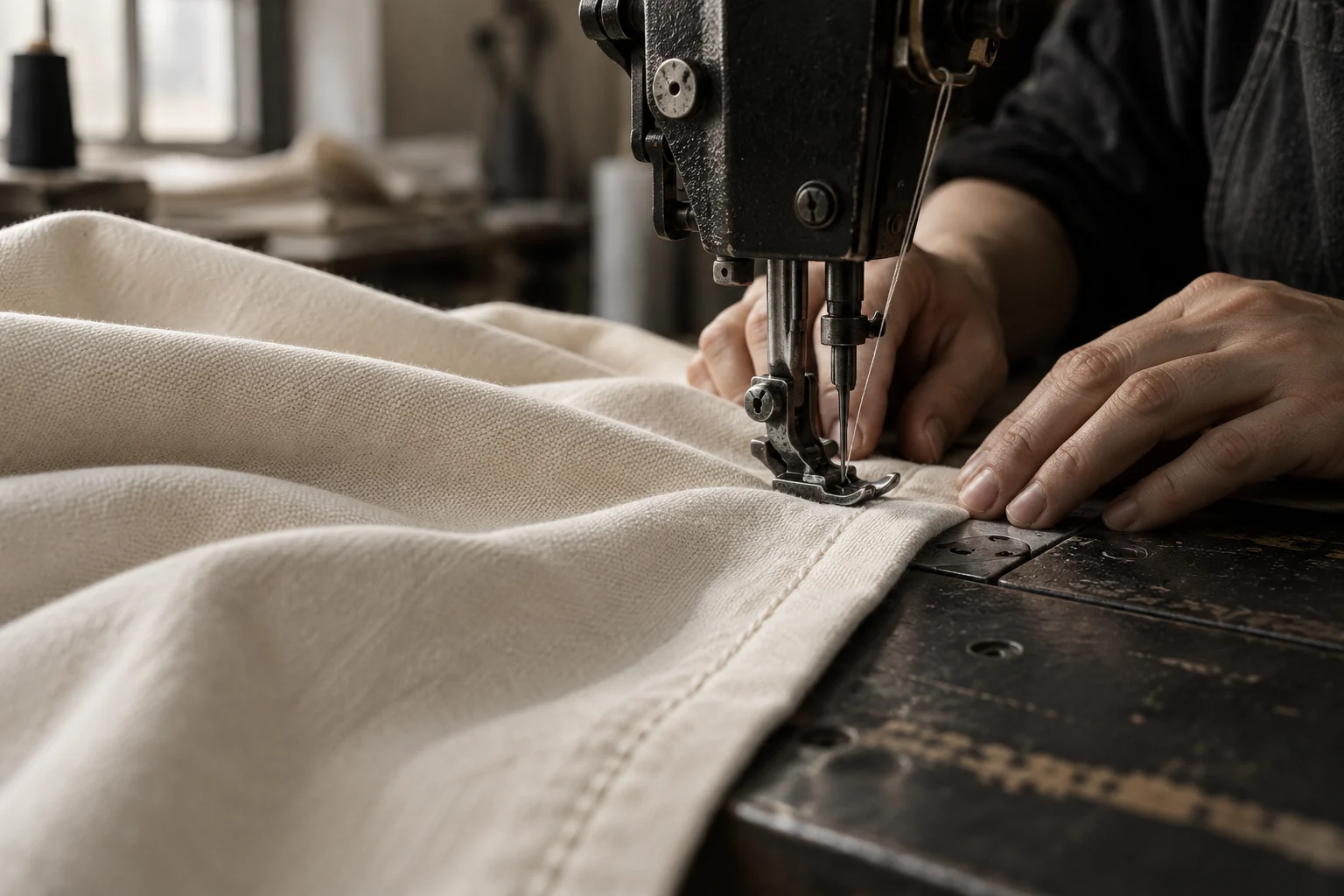
Before cutting
Verify the approved fabric, shade lot, usable width, defects and dimensional behaviour. Match the pattern revision and cutting instructions to the approved sample. Directional surfaces, stripes and checks can alter consumption and layout. A short pre-cut review can prevent a much larger bulk issue.
During sewing and decoration
Check the first completed pieces before the full quantity advances. Review seam construction, stitch balance, critical dimensions and decoration placement. Inline controls should use the agreed specification and record issues with an action, not merely note that inspection took place.
Final inspection and packing
Review appearance, measurements, workmanship, labels, quantities and packing against the agreed criteria. Measurement tolerance is typically ±1–2 cm under the standard policy, but critical points and product-specific limits should be agreed in the technical file. A tolerance is not a substitute for a defined measurement method.
Quantities and documented exceptions
The standard production quantity tolerance is ±10%; uneven size or colour splits may require up to ±20% by agreement. Confirm the applicable terms in the order. Report deviations before shipment and agree any corrective action. Keep final approved reports and packing details with the order documents. For a Tuğhan Textile order, keep agreed quantities, tolerances and accepted exceptions connected to the current order documents.
Agree quality evidence before the order, not after a dispute
Define an approved reference sample, points of measure and tolerances, shade reference, workmanship criteria, tests, inspection responsibilities and reporting. Record which checks are internal and which are independently commissioned. For Tuğhan Textile, smaller orders receive standard internal quality control; formal AQL, inline and final inspection programmes are offered for orders of at least 5,000 pieces, with scope confirmed in the quotation. Do not assume an independent inspection is included.
AQL does not mean every item was inspected
A sampling inspection has an agreed lot definition, sampling plan, defect classification and acceptance criteria. It is different from checking every garment. Ask what was inspected, when, by whom and what the report actually covers. A passing result does not remove the need for material approval, production checks or a clear process for handling nonconforming goods.
If the delivery differs from the approved sample
Keep the approved reference and revision record. Identify the affected model, colour, size, quantity and defect with photographs, measurements and a concise explanation. Distinguish a measurable deviation from a new preference. Notify the supplier promptly under the agreed claim terms and preserve evidence before altering or reselling the goods. Agree corrective action in writing rather than assuming a refund or remake is automatic.
A defect is a clue. Find the cause.
This diagnostic table supports investigation; a visible symptom can have several causes. Review the actual fabric, machinery and process before choosing corrective action.
| Observed issue | Possible contributors | What to check | Practical next step |
|---|---|---|---|
| Twisted side seam | Material spirality, handling or pattern alignment may contribute | Compare before/after-care measurements and fabric references | Investigate fabric stability and cutting orientation before recutting |
| Wavy neckline | Rib length/recovery, differential feeding or stretch handling | Compare neckband and body behaviour; review sewn first-off | Trial adjusted assembly and compatible rib; approve the result |
| Puckered woven seam | Tension, thread, feeding or material response | Compare unwashed and cared sample; examine inside seam | Trial seam parameters and pressing on the actual fabric |
| Skipped stitches | Needle, thread, machine setup or fabric interaction | Inspect under relevant extension and lighting | Stop affected operation and validate the corrected setup |
| Broken stretch seam | Insufficient elongation or damaged thread | Test under intended movement; inspect seam balance | Use a suitable seam and thread/setup after validation |
| Open seam near stress point | Insufficient allowance, stitch integrity or reinforcement | Check crotch, pocket and armhole stress areas | Review construction and reinforcement before repeating |
| Needle holes / cutting | Needle damage, size or material sensitivity | Inspect seams after relaxation and care | Review needle selection and damaged panels |
| Print peeling | Substrate, adhesive, curing/application or care mismatch | Compare applied sample, process record and care result | Validate process on production substrate before bulk |
| Embroidery puckering | Density, backing, hooping or fabric instability | Lay flat and compare after care | Trial backing, density and stabilisation |
| Shade panels | Mixed lots, nap direction or dye variation | Compare in agreed lighting and panel orientation | Segregate lots and align cutting and acceptance process |
| Fabric pilling | Fibre/yarn/construction and friction interaction | Evaluate with an agreed relevant test and use condition | Review material and finishing; do not promise a universal cure |
| Shiny press marks | Heat, pressure, moisture or surface sensitivity | Inspect under side light against approved reference | Trial protective pressing method and settings |
| Zipper waviness | Tape/body shrinkage differential or feeding | Compare relaxed and post-care sample | Review stabilisation, tape and assembly sequence |
| Uneven hems | Cutting, assembly, pressing or fabric relaxation | Measure both sides with agreed lay-flat method | Review pattern balance and process handling |
| Elastic rolling | Elastic specification, casing or fit mismatch | Wear-test movement and inspect waistband construction | Trial suitable elastic and attachment design |
| Pocket distortion | Grain, stretch, reinforcement or placement | Load-test intended use and compare symmetry | Review support, position and attachment before bulk |
12 quality checks to discuss before production
| Check | Purpose | What to define / record |
|---|---|---|
| Composition | Confirm declared fibre blend | Material documentation; laboratory verification if required |
| GSM & usable width | Check consumption inputs | Representative fabric measurements against agreed limits |
| Dimensional change | Understand care/process movement | Record initial/final marks, cycle, drying and both directions |
| Spirality / skew | Check alignment stability | Record rotation or skew before/after agreed process |
| Colourfastness | Evaluate colour behaviour | Select tests relevant to washing, rubbing, perspiration or use |
| Pilling / abrasion | Evaluate surface appearance | Agree the method, rating and exposure relevant to the product |
| Stretch & recovery | Check movement and shape retention | Define extension, cycles and recovery conditions |
| Opacity | Check coverage in use | Review relevant stretch, light and contrasting background |
| Seam strength / slippage | Check assembly integrity | Select seam evaluation appropriate to the fabric and use |
| Decoration durability | Validate print or embroidery | Inspect appearance, adhesion and cracking after agreed care |
| Trim function | Check components in use | Review zipper, snap, elastic and attachment performance |
| Finished measurements | Check fit repeatability | Use the approved POM method and point-specific tolerances |
Further technical reading: CottonWorks quality testing ↗ · Dimensional change and skew ↗. Tables are original planning guidance, not specifications or test certificates.
A release checklist you can actually use
Questions, answered
Can every measurement vary by 2 cm?
No universal tolerance is appropriate for every point. Agree the tolerance for each relevant measurement, particularly sensitive openings and close-fitting products.
What if the finished quantity differs from the order?
The agreed production tolerance and commercial terms govern the difference. Confirm them before placing the order.
Should I inspect only the final shipment?
Final inspection cannot recover every earlier decision. Review materials, first completed pieces and inline results as well.
Is a final inspection a guarantee of every garment?
No. The inspection scope and sampling plan must be agreed. Sample-based inspection does not examine every unit or guarantee defect-free goods.
What is the difference between a defect and an agreed variation?
The specification and acceptance criteria define the difference. Record intentional wash/shade variation and permitted tolerances before manufacturing.
Should I reject a fabric just because one sample pills?
Investigate the material, process, use and test conditions. Agree an appropriate evaluation rather than drawing a conclusion from one uncontrolled observation.
Who decides whether a deviation is acceptable?
The order should identify approval responsibility and the acceptance criteria. Record exceptions and decisions before shipment.
Does an AQL pass mean there are no defects?
No. It is the outcome of an agreed sampling plan, not a guarantee that every unit was checked or that the shipment is defect-free.
Is independent AQL inspection included in every Tuğhan Textile order?
No. Smaller orders use standard internal quality control. Formal AQL, inline and final inspection programmes apply from 5,000 pieces, with scope and any independent inspection arrangement confirmed in writing.
What evidence should I keep if a shipment has a problem?
Keep the approved reference, specification revision, affected quantities, clear photographs, measurements and the inspection or packing record. Report the issue under the agreed claim process before changing the goods.