In this guide · 8 practical sections
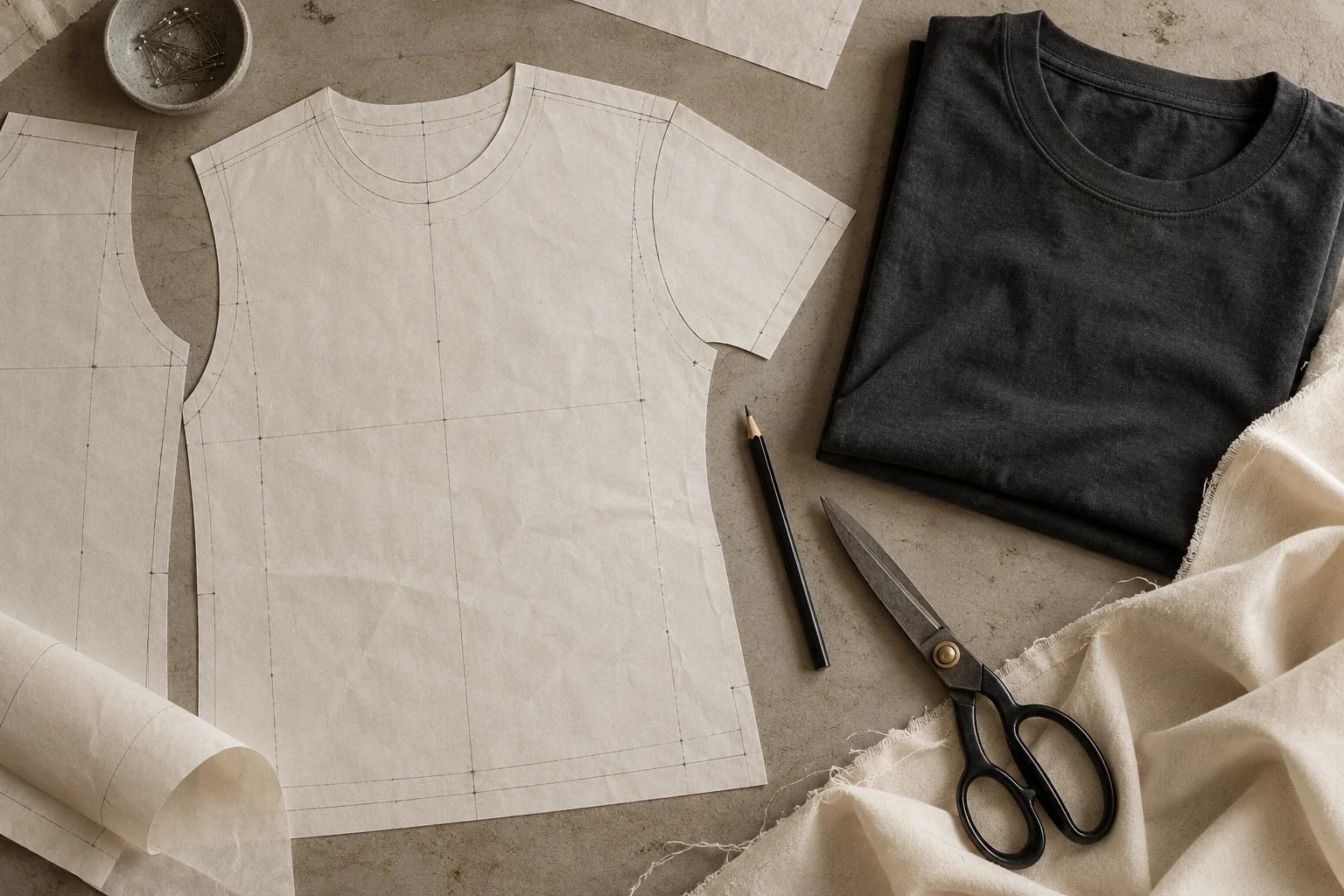
Translate the look into construction
Begin with front and back flats and close-ups of important details. Describe the fit, silhouette, seam locations, openings, pockets and hem treatment. Fashion photographs communicate mood, but technical drawings clarify what must actually be made. Avoid relying on a lifestyle image for hidden construction.
Develop for real use
Think about movement, layering, skin contact, weather and washing. An oversized body still needs a functional neck opening and stable shoulder construction. A pocket must fit its intended contents. A lightweight fabric may need lining or a revised seam method to deliver the desired coverage.
Make materials and design agree
The same pattern behaves differently in a fluid woven, rigid cotton twill and stretchy jersey. Establish the material early enough to evaluate drape, recovery and shrinkage. Substituting fabric after fit approval can change dimensions and performance and may require a new sample.
Keep a controlled revision history
Assign a style code and a revision number. Record each requested change with a date and a measurable instruction. Replace vague comments such as make it more premium with an observable requirement: denser rib, cleaner seam finish, a defined fabric weight or a revised topstitch detail.
A reference photo cannot describe the entire garment
Photos communicate silhouette and mood but may conceal lining, layer count, seam type, internal support, pocket construction and fastening. Add a front and back flat, detail views and a written construction note. Where a detail is uncertain, ask the developer to propose alternatives and compare samples. Never approve “same as photo” while assuming the factory can see hidden construction.
Develop a set as related products, not one undivided item
A coordinated top, bra and leggings can share a colour direction while needing different fabrics, lining, elastics and tests. Give each model its own technical file and size-colour quantity matrix. Document which materials must match and which can differ. Confirm whether minimums apply separately to each garment, fabric lot, mesh, pad and colour before treating the collection total as the order quantity.
Use a decision log instead of scattered messages.
| Date / revision | Decision | Impact to review | Approval owner |
|---|---|---|---|
| R1 → R2 | Change fabric from lightweight jersey to heavy jersey | Fit, drape, neck support, consumption, price | Brand + developer |
| R2 → R3 | Add zipper pocket | Pattern, sewing sequence, trim lead time | Brand + production |
| R3 → R4 | Add garment wash | Dimensions, decoration sequence, colour variation | Brand + finisher / production |
| R4 → final | Approve after consolidated changes | Cost, sample status and delivery schedule | Named final approver |
Design for production: 8 useful questions
Questions, answered
Can a mood board replace a technical file?
No. It communicates direction but not the measurements, materials and construction needed for production.
Can I change the fabric after approving the pattern?
It may be possible, but the new fabric can alter fit and shrinkage. Review it and resample if needed.
What belongs in a revision log?
Record date, file revision, sample identifier, requested change, owner and approval status. Include any effect on material, cost and timing.
Should I specify every stitch count myself?
State the outcome and relevant construction requirements. Review technical stitch choices with the production team where you lack expertise.
Can I remove a feature to meet my target price?
Yes, but review the functional and fit effect. Simplify consciously and approve the revised sample or specification.
Can you tell if a garment is single or double layered from a photo?
Not reliably in every case. Provide internal views or a construction note, identify the areas needing lining and confirm the construction in a physical sample.
Can my leggings and sports bra use exactly the same fabric?
Possibly, but each garment has different support, opacity, recovery and construction needs. Review the proposed material and any lining or mesh separately before approving a shared-fabric plan.